Dreaming of dog: what does this dream mean?
In short
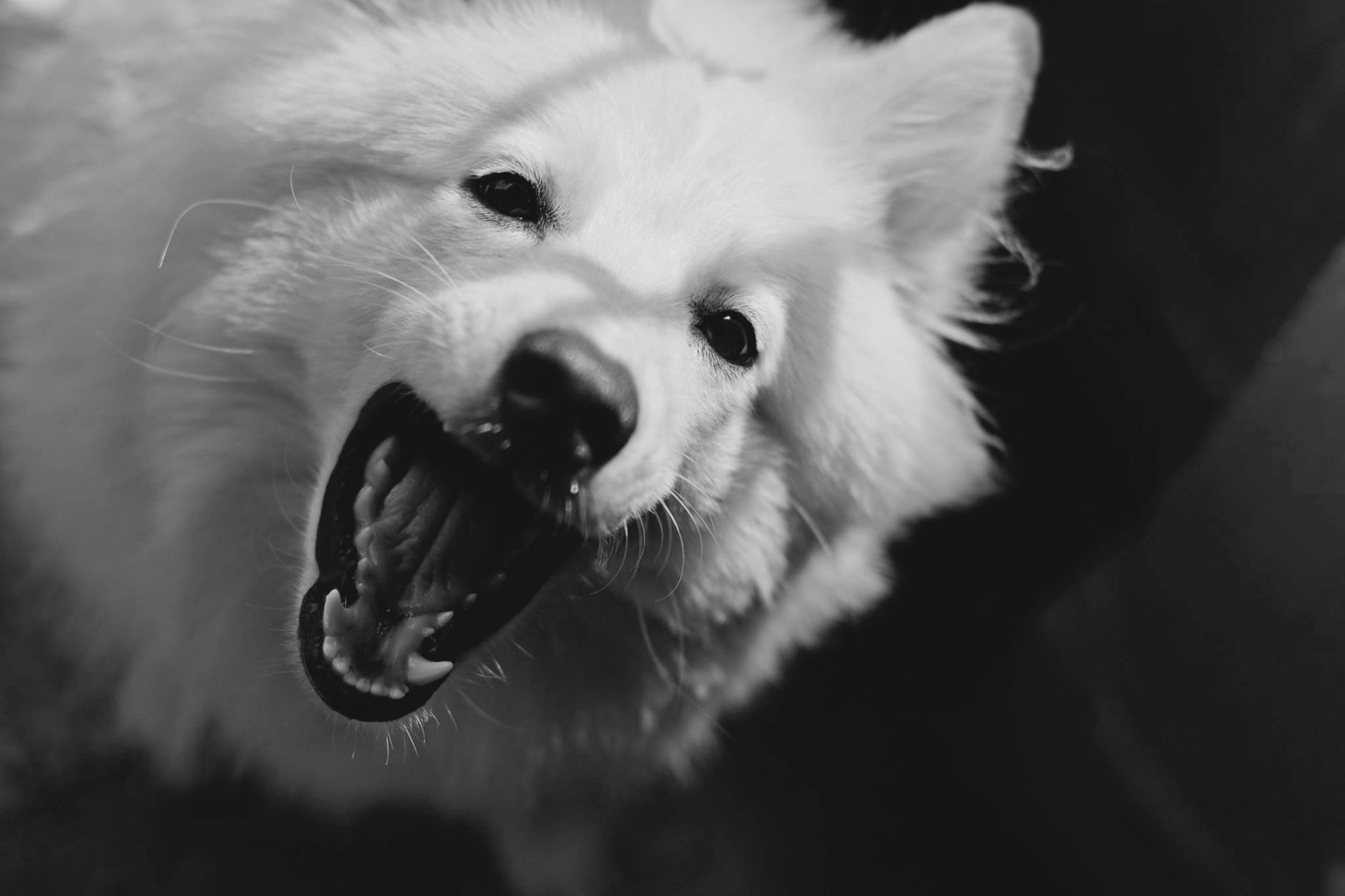
Dreaming of a dog most often speaks to loyalty, steadfast friendship, and instinct. Depending on how the animal behaves — friendly or aggressive, familiar or unknown — the dream reflects your close relationships, your relationship to trust, or psychic instincts you are being asked to integrate. An aggressive dog can warn of conflict or betrayal; an affectionate one signals a bond you can rely on.
What are the interpretations of this dream?
Psychoanalytic interpretation (Freud, Jung)
According to Sigmund Freud
Freud treated animals in dreams as frequent stand-ins for drives and repressed instinct. The dog, the domesticated animal par excellence, can represent in a Freudian reading the 'civilised' drives — mastered yet always present beneath the surface. An obedient dog suggests an instinct held under control; a rabid or snarling dog, a drive that has slipped the grip of the ego. The dog may also stand in for a person in the dreamer's circle, particularly in dreams where the animal behaves like someone the dreamer recognises, displacing feelings about that person onto a less threatening figure.
According to Carl Gustav Jung
For Jung the dog is a psychopomp — a guide between worlds, between consciousness and the unconscious. In myth (Cerberus guarding the underworld, the Egyptian jackal-god Anubis, the spectral 'Black Shuck' of English folklore) the dog escorts souls. In analytical psychology, then, dreaming of a dog can mark a psychic passage, a transition between two states of awareness. The dog also figures the loyal instinct of the psyche itself — the faithful inner companion that leads you toward your own truth, provided you are willing to listen to it.
Traditional and oneirocritic interpretation
In the dream-lore tradition the dog reads chiefly as a sign of faithful friendship and protection, but it can flip to betrayal or falseness depending on its behaviour. Artemidorus of Daldis, in the Oneirocritica, draws careful distinctions: a hunting dog represents active, loyal companions; a stray dog points to unstable people unworthy of trust; a biting dog warns of betrayal by someone close. Later English-language dream dictionaries in the popular tradition — from the Victorian fortune-telling manuals onward — settled the dog firmly as 'the faithful friend,' so that a dream of a friendly dog is commonly read as the sign of a solid friendship or of help on its way.
According to cultural and religious traditions
Tradition egypte_antique
In ancient Egypt the dog is closely tied to Anubis, the jackal-headed god who guides the souls of the dead and weighs the heart against the feather of truth. To dream of a dog or canid could be taken as a sign of divine protection in the passage between life and death, or as an omen connected to the ancestors watching over the dreamer.
Tradition islam
In the classical Islamic tradition (Ibn Sirin) the dog in a dream is markedly ambivalent. A tame, obedient dog can stand for a faithful servant or dependent; a barking or biting dog generally signifies an enemy or a malicious person. A guard dog means protection; a stray dog, bad company. Because the dog's ritual purity is debated in Islamic law, the oneiric symbol often carries a note of caution.
Tradition celtic_british_folklore
In British and Celtic folklore the dog is a liminal creature haunting boundaries — crossroads, churchyards, the threshold between life and death. The 'Black Shuck' of East Anglia and the many spectral hounds of the British Isles are death-omens, yet hounds also accompany hunter-gods and goddesses of healing as guardians and guides. A dream dog in this register can read as either an ominous herald or a protective escort, the difference lying in how it carries itself toward the dreamer.
Dreaming of dog: what does the context mean?
| Dream situation | Interpretation |
|---|---|
| an aggressive dog that bites | A dog that attacks or bites is one of the most emotionally charged dog dreams. It can point to betrayal by someone you trusted — the archetype of 'the friend who turns' — or to a situation in which your loyalty is being severely tested. Psychoanalytically it may also embody a repressed aggressive drive seeking expression: anger you have not yet allowed yourself to voice. |
| a black dog | The black dog has been linked since antiquity to chthonic forces and death (the dark hounds of Hades, the English spectral 'Black Dog'). In a dream it can symbolise latent depression — the 'black dog' Winston Churchill famously used to name his own low moods — a trial to be endured, or, in other traditions, the absolute fidelity of an unseen protection. Jung often reads it as a figure of the shadow, the hidden aspect of the personality asking to be acknowledged. |
| a puppy or small dog | A puppy or small dog is generally tied to something young, vulnerable, and tender in your life. It may represent a new or fragile relationship that needs care and patience, or an aspect of yourself that is reaching for attention, warmth, and nurture. |
| a dead dog | A dead dog in a dream often symbolises the end of a friendship or a relationship of trust, or the loss of a loyally protective part of yourself. If you share a strong bond with a real dog, the dream may also reflect waking anxiety about that animal's health or how much time you have left together. |
| an unknown dog | A dog you do not recognise can represent an aspect of your own instinct, or a person whose trustworthiness you have not yet settled. Its behaviour in the dream is the best guide: friendly means an unfamiliar but positive opportunity; threatening counsels caution in a new relationship or situation. |
| a loyal dog guarding or following you | A dog that walks at your side, guards your home, or refuses to leave you often mirrors your own steadfastness — or a relationship that has proven dependable. It can also reassure you that your instincts are sound and worth trusting at a moment when you have been second-guessing yourself. |
What does dog symbolize in dreams?
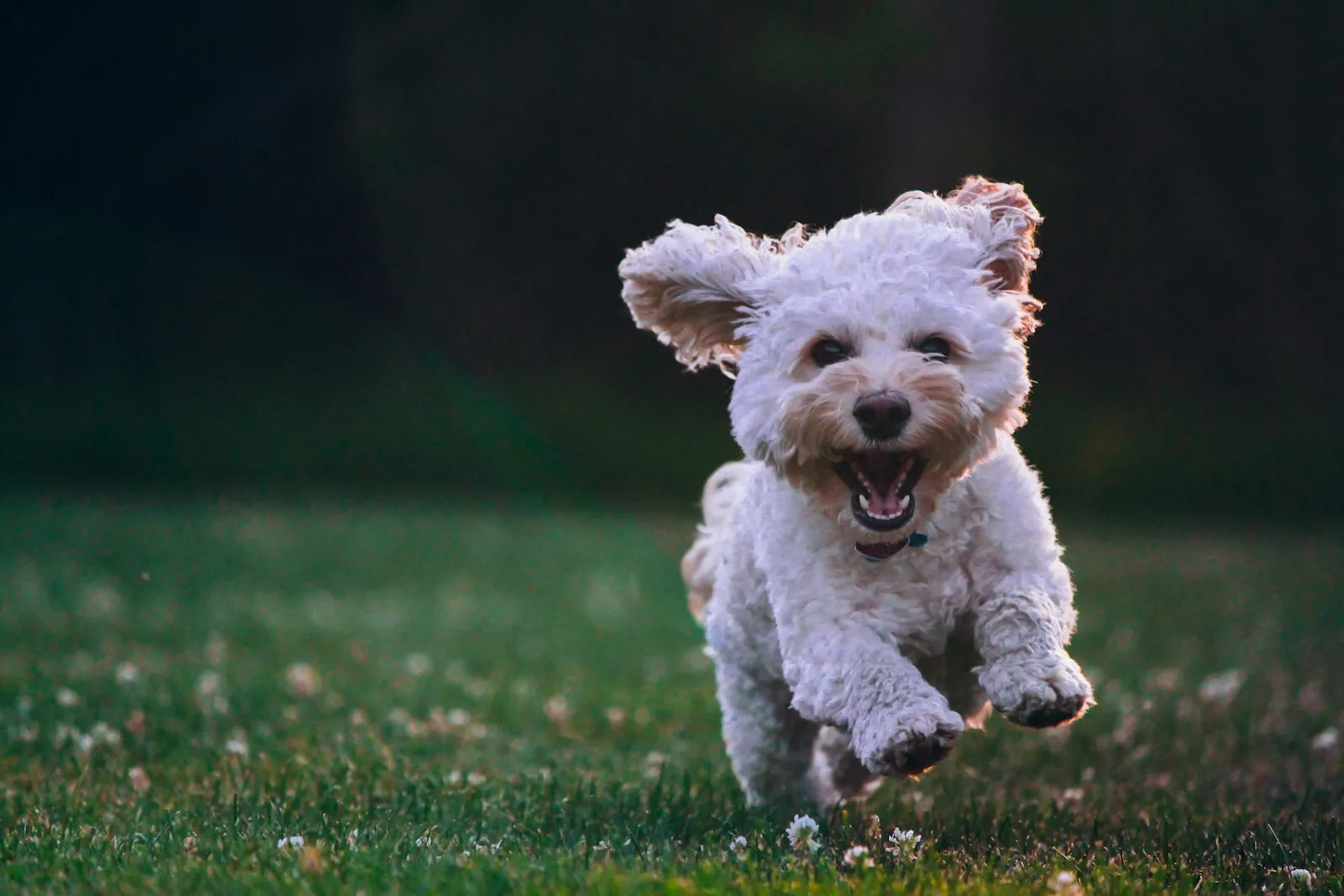
The dog was the first animal humans domesticated — an alliance that genetic and archaeological evidence dates somewhere between roughly 15,000 and 40,000 years ago. It therefore embodies a foundational pact between wild instinct and civilization. In the collective unconscious the dog carries the emblem of unconditional loyalty and faithful protection, but also of the guide between worlds (Cerberus at the gates of Hades, the jackal-headed Anubis, the psychopomp hounds of folklore). Its capacity to sense what the conscious human mind cannot — through scent and an uncanny attunement to human emotion — also makes it a natural metaphor for intuition and psychic instinct. In English-speaking culture the dog is proverbially "man's best friend," and that idiom shapes how the symbol is read: a dream dog almost always speaks to your relationships, to the trust you extend or expect, and to your own deep-running instincts.

Frequently asked questions
- What does it mean to dream of your own dog that has died?
- This dream is very common after the loss of a companion animal. It often expresses grief and longing, but many people experience it instead as a comforting 'visit' that brings peace. Psychologically, the beloved animal can also stand for a quality of the bond itself — unconditional acceptance, uncomplicated joy — that you are mourning beyond the animal alone.
- What does it mean when a dog talks in a dream?
- A talking dog greatly amplifies the symbolic message. Your loyal instinct — or a trusted figure in your life — is trying to tell you something important. If you can remember what was said, the words deserve particular attention, because the dream has gone out of its way to make them heard.
- What do several dogs in a dream represent?
- Multiple dogs evoke a group of people or a set of dynamics: a pack can stand for your circle of friends, your family, or your colleagues. Their collective behaviour describes the dynamic of that group — a friendly pack means solid support, while a menacing pack points to group pressure or a feeling of being socially surrounded.
- What does dreaming of an injured dog mean?
- An injured dog can represent a friendship under strain, a past betrayal that still leaves a mark, or a loyal part of your own character that has been wounded — by an experience of disloyalty, for instance. The dream is an invitation to tend to that relationship, or to that part of yourself, rather than ignore it.
- What does a dog barking but not biting mean in a dream?
- A dog that barks without following through often represents a threat whose real intensity is lower than your first impression of it — someone who makes noise but does not act, or an anxiety that alarms you without necessarily coming to pass. It is a prompt to assess calmly the true scale of a situation you have been perceiving as dangerous.
- Is dreaming of a friendly dog a good sign?
- In most Western dream traditions, yes. A warm, friendly dog typically signals trustworthy companionship, loyalty you can lean on, and often help arriving from someone in your circle. It can also reflect that you yourself are being a faithful friend, or that your relationships are on healthy footing.
Sources and references
- Jung, C.G. (1964). Man and His Symbols. Doubleday / Dell, 1968.
- Artemidorus (2nd c. CE). The Interpretation of Dreams (Oneirocritica), trans. Robert J. White. Noyes Press, 1975.
- Freud, S. (1900). The Interpretation of Dreams, trans. James Strachey. Standard Edition, Hogarth Press / Avon, 1965.
- Serpell, J. (ed.) (1995). The Domestic Dog: Its Evolution, Behaviour and Interactions with People. Cambridge University Press.
- Westwood, J. & Simpson, J. (2005). The Lore of the Land: A Guide to England's Legends. Penguin (on Black Shuck and spectral hounds).
- Garfield, P. (2001). The Universal Dream Key. HarperCollins (on common animal dream motifs).
Comments
…