Dreaming of falling teeth: what does this dream mean?

In short
Dreaming that your teeth fall out is one of the most widely reported dreams across every culture and era. It typically channels a fear of losing something vital — self-image, personal power, attractiveness, or control over one's life — and tends to surface during periods of transition, stress, or shaken identity.
What are the interpretations of this dream?
Psychoanalytic interpretation (Freud, Jung)
According to Sigmund Freud
In The Interpretation of Dreams (1900), Freud places tooth dreams within his theory of bodily symbolism, advancing a reading tied to anxiety and, in his more controversial passages, to repressed sexual tension and the dread of bodily diminishment — a line of thought that later analysts heavily qualified. More broadly, teeth for Freud signify the bite: oral aggression and the will to assert oneself. Their loss in a dream can express a sense of being stripped of that aggressive force, a felt impotence, or a humiliation suffered or feared in waking life.
According to Carl Gustav Jung
Jung reads the image more expansively. Because teeth are bone — among the most durable structures of the body, the parts that outlast the flesh after death — analytical psychology treats them as something essential and irreducible in the personality. Losing them in a dream can flag a deep sense of vulnerability, a fear of ageing, or a phase in which one fears the solid ground of one's identity is crumbling. Yet Jung also sees in the falling tooth an invitation: to relinquish something outworn so that renewal can follow, much as the milk tooth must go to make room for the adult one.
Traditional and oneirocritic interpretation
In the popular dream-lore of the English-speaking world, as in much of Europe, a tooth falling out has long been read as an omen of death or bereavement — frequently the loss of a relative. The link rests on the old folk idea that each tooth stands for a family member, the front teeth being the dearest kin. The interpretation reaches back to the second-century Greek diviner Artemidorus of Daldis, whose Oneirocritica distinguishes carefully between the upper and lower teeth and the manner of their loss. This funereal reading remains lodged in the collective imagination — preserved in Victorian and Edwardian dream dictionaries and chain-letter superstition — even though modern psychology dismisses it as groundless.
According to cultural and religious traditions
Tradition Islam
In the classical Islamic tradition associated with Ibn Sirin, teeth represent members of the family: the upper teeth the male relatives, the lower the female. A tooth that falls may therefore foretell the illness or death of a kinsman, depending on which it stands for. If the tooth drops into the palm of the hand, it can signal a gain — a child or money; if it falls to the ground and is lost, the omen for a relative turns clearly negative.
Tradition Chinese folk belief
Chinese tradition has long treated the dream as inauspicious, tied to death or trouble within the family, and some customs advise not speaking of it aloud so as not to 'summon' misfortune. In a related Taoist strand, teeth also stand for speech: to lose them in a dream can mean having said something one should not have, or a loss of standing and credibility before others.
Tradition Anglo-American folklore
Beyond the death omen, British and North American folk traditions read losing teeth as a warning about money or family fortunes, and weave teeth into rites of passage — the Tooth Fairy of childhood reframes the lost tooth as a fair exchange and a step toward growing up, quietly recasting loss as gain and maturation.
Dreaming of falling teeth: what does the context mean?
| Dream situation | Interpretation |
|---|---|
| Teeth falling out painlessly | When the teeth come loose with no pain, most interpreters read the dream as less alarming: the change is happening without major trauma. Psychologically it can suggest you are accepting — perhaps unconsciously — a transition you consciously fear, your inner self already making peace with what your waking mind resists. |
| Teeth falling out with pain and blood | Pain and blood raise the symbolic intensity. The dream may voice a loss felt as deeply wounding, or a particularly anxiety-charged situation in waking life. Blood is a symbol of vitality, so its presence hints that something important is costing you a great deal emotionally. |
| A single tooth falling out | The loss of just one tooth is usually read as a contained, limited setback — a project that does not pan out, a relationship that frays, a small humiliation. The dream is far less ominous than a wholesale collapse of the mouth. |
| All the teeth falling out | Losing every tooth amplifies the symbolic dread considerably. This dream tends to arrive in seasons of sweeping self-questioning, profound crisis, or radical transformation. It can also express an outright panic about ageing and physical decline. |
| Spitting teeth out | Finding teeth loose in the mouth and spitting them out is a very common variant. It can mean you are 'chewing over' something — words left unsaid, a hard truth you struggle to voice. The tooth held back and then expelled can stand for something you have kept bottled up for far too long. |
| Crumbling or rotting teeth | Teeth that crumble, chip, or rot rather than fall cleanly often point to a slow erosion of confidence or a worry that you are 'losing face' bit by bit. The gradual decay mirrors a fear of decline that builds quietly rather than striking all at once. |
What does falling teeth symbolize in dreams?
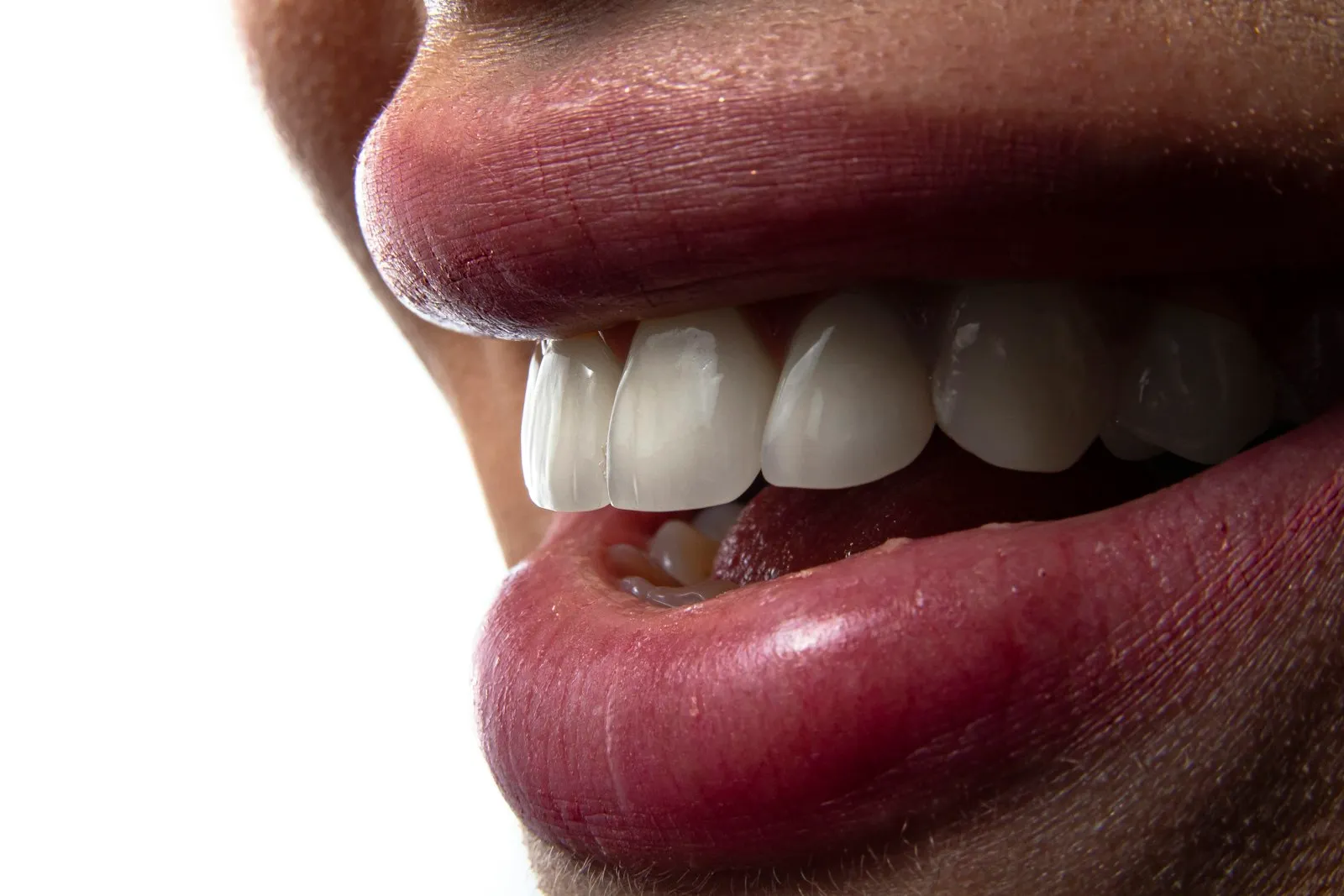
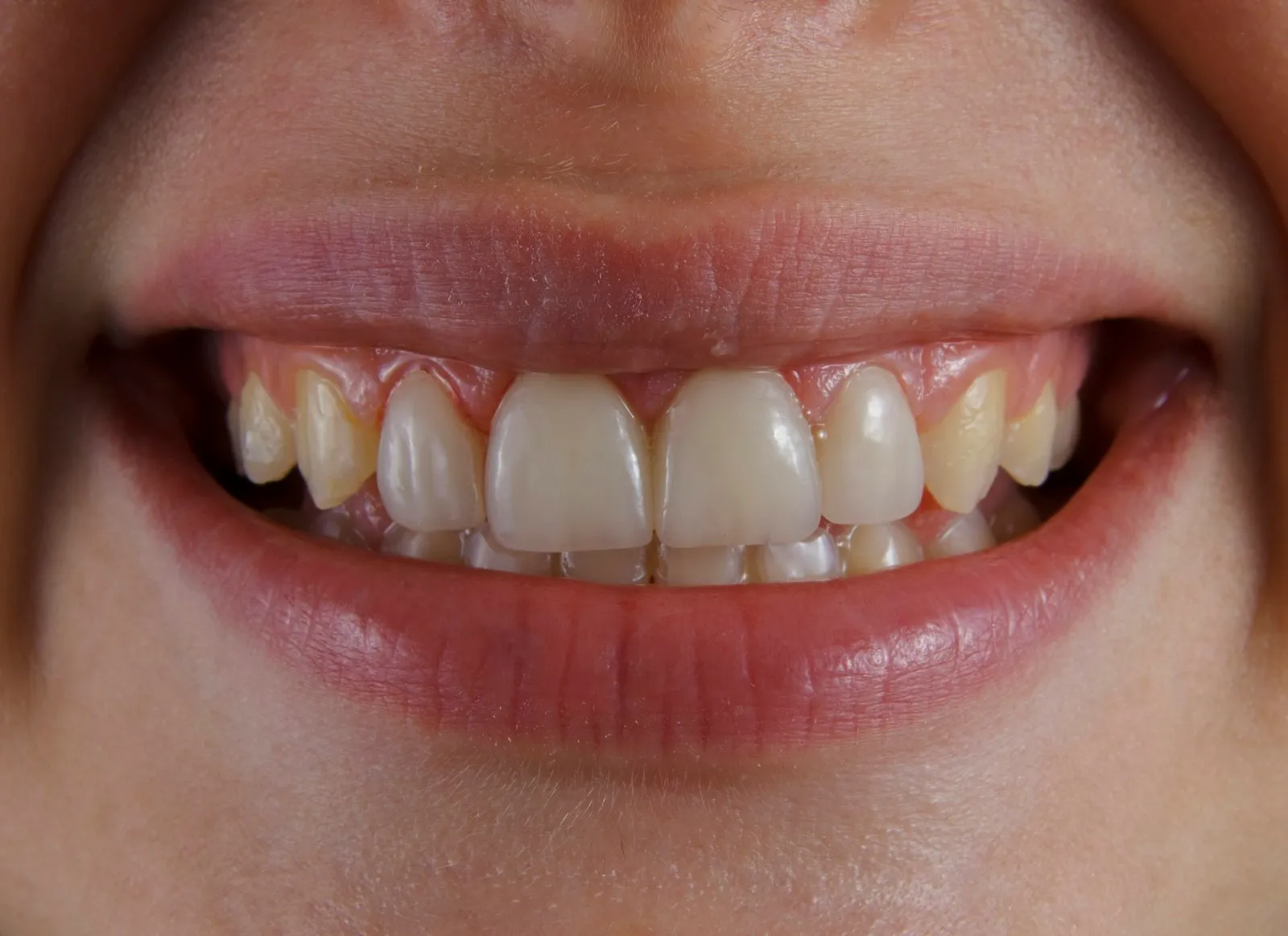
Teeth hold a singular place in the human imagination. They are at once a tool (we bite, chew, and quite literally "sink our teeth" into reality), a sign of strength and health, an instrument of seduction (the smile), and a marker of age — from the loss of baby teeth, through the adult bite, to the erosion of old age. In nearly every culture, teeth stand for personal power, the face we show the world, and the capacity to hold our ground against adversity. To dream of them loosening or falling therefore touches something foundational in the psyche: the dread of losing our grip — on our looks, our authority, our hold on events. The dream is universal precisely because these fears are universal, and because, unlike most body parts, teeth are visible to others every time we speak or smile, fusing private anxiety with public exposure.
Frequently asked questions
- Why do so many people dream their teeth are falling out?
- It is one of the most widely catalogued recurring dreams in the world, across all cultures. Research led by psychologist Naphtali (Tali) Bar-Shalom Bar and colleagues, and more prominently the study by Rozen and Soffer-Dudek published in Frontiers in Psychology (2018), found the dream especially common among people with dental irritation or tension in the jaw, suggesting a direct tie to real physical sensations during sleep. Beyond that, its universality reflects what teeth symbolize — power, image, identity — concerns shared by all of humanity.
- Does this dream really foretell a death in the family?
- This widespread folk belief — found in European, Islamic, and Chinese traditions alike — has no scientific basis. What it really expresses is the fear of loss carried by the symbol itself. Contemporary psychology favours reading the dream in terms of present-day fears and tensions rather than as an omen. There is no reason to feed your anxiety with a prophetic interpretation.
- Is this dream linked to stress?
- Yes, very clearly. The dream appears more often during periods of stress, job insecurity, life transitions, or relationship conflict. Studies — notably Zadra and Donderi (2000) in the Journal of Abnormal Psychology — show that anxiety dreams, including teeth dreams, are more frequent among people under chronic stress.
- What does it mean to dream that your teeth grow back?
- This less common dream is generally positive: after loss comes renewal. It can symbolize a phase of rebuilding your sense of self, a second chance, or the resolution of a conflict after a hard stretch. It is the cycle of life expressing itself — much like the natural replacement of milk teeth in childhood.
- Should I see a therapist if I have this dream often?
- Not necessarily. A recurring teeth-falling-out dream is very common and not pathological in itself. But if these dreams come with sustained daytime anxiety, or form part of a wider pattern of recurring nightmares that disrupt your sleep, a mental health professional can help you explore the underlying tensions. The dream is a signal, not a sentence.
Sources and references
- Freud, S. (1900). The Interpretation of Dreams. Trans. James Strachey, Standard Edition, vols. IV–V. Hogarth Press / Basic Books, 2010.
- Jung, C. G. (1964). Man and His Symbols. Aldus Books / Dell, 1968.
- Artemidorus of Daldis (2nd c. CE). The Interpretation of Dreams (Oneirocritica). Trans. Robert J. White. Noyes Press, 1975.
- Zadra, A. & Donderi, D. C. (2000). Nightmares and bad dreams: Their prevalence and relationship to well-being. Journal of Abnormal Psychology, 109(2), 273–281.
- Rozen, N. & Soffer-Dudek, N. (2018). Dreams of teeth falling out: An empirical investigation of physiological and psychological correlates. Frontiers in Psychology, 9, 1812.
- Hall, C. S. & Van de Castle, R. L. (1966). The Content Analysis of Dreams. Appleton-Century-Crofts.
Comments
…